Your Great Decisions Prep Guide: Intro
|
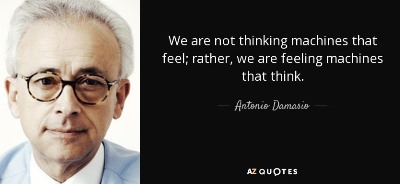
Hi Reader, What’s the secret to making great decisions? You’ve probably been told by parents, teachers, or some sort of authority that the key is to be logical and to stop listening to your feelings. You’ve been told they get in the way, or that they cloud your judgment. But when we rely only on logic, we miss a critical detail. Intro: The Neurology of DecisionsIn 1982, a Portuguese neuroscientist named Antonio Damasio made a fascinating discovery. His patients with damaged emotional centers could think with perfect logic and ace IQ tests. Yet they couldn't choose a pen color or decide what to eat for lunch. They would spend hours analyzing every possible option, unable to make a choice. The lesson was clear: It's not logic that drives our decisions, but our emotions. And when we make decisions, we’re doing it to feel a certain way, or to not feel a certain way. For example, if you’re scared of feeling like a failure, you’re less likely to make decisions that are risky. If you’re scared of rejection, you’re less likely to speak your truth to someone who might not like it.
This means that if we want to make great decisions, we must go beyond “logic” and “frameworks.” We must develop a deeper understanding of our emotions, and develop a new relationship to them, rather than ignoring or dismissing them. That’s the secret. Great decision-making is the same as great emotional intelligence. Because when we push emotions aside in the name of being "rational,” they don't disappear. They surface as procrastination, as analysis paralysis, or as that nagging feeling that something's off despite all the logical evidence. Avoided emotions end up running your life. Calling the shots, skewing your judgement, and rewriting the entire context you end up living in. This Prep Guide will help you unwind this pattern. What to ExpectOver the next five lessons, we’ll do a deep dive into emotions and how they drive decisions.
Think of this as a “lite” version of the Great Decisions Course. It will create an important intellectual foundation that you can build upon to go much deeper during the course itself. That’s where we’ll be training you on how to actually practice and integrate these learnings in an embodied way, to ensure that it makes a lasting impact on your life and your decisions. Go deeper: Watch this video breakdown on decisions Big Love, Joe PS. To respect your inbox, we'll only be sending out the first few lessons. Only waitlist members will get all five (plus early access to applications). Click below to be sure that you get the full Prep Guide.
|
Art of Accomplishment
Hi Reader, Now that we’ve begun to identify some of your avoided emotions, we’re going to take this process to the next level. This is the unlock that can create some incredibly powerful transformations. Because whether you’re aware of it or not, your mind is constantly telling you stories about your emotions. But many of those stories aren’t true. The Boy and the River There was once a boy who was terrified of the river. He had fallen in once as a child and remembered the cold shock, the...
Hi Reader, Now that we’ve begun to identify some of your avoided emotions, we’re going to take this process to the next level. This is the unlock that can create some incredibly powerful transformations. Because whether you’re aware of it or not, your mind is constantly telling you stories about your emotions. But many of those stories aren’t true. The Boy and the River There was once a boy who was terrified of the river. He had fallen in once as a child and remembered the cold shock, the...
Hi Reader, In our last lesson, we explored the Golden Algorithm. We saw how the emotions we avoid don’t just go away. Instead, they come back and end up unconsciously driving all our decisions. And as a result, our lives. Today, we’re going to take the first step in undoing the Golden Algorithm. We will walk you through exactly how to find some of these “blind spot” emotions. The Jester There was once a town jester who loved to dance about wildly in the streets. He would wail, laugh, and cry...